1. Introduction: Why Surfactants Issue
Surfactants are among the most silently prominent molecules of the modern globe. They are the reason water can lift oil from an unclean dish, the reason hair shampoo lathers, the reason commercial cleansers can penetrate oil-soaked equipment, and the reason fabrics, paints, and individual treatment products act the way consumers anticipate. Yet for all their usefulness, surfactants lug an obligation that couple of users ever before see. Once a product is rinsed down a drain or launched into a river, its trip has actually only started. The particle that carried out so well in the sink needs to now face the complicated biology and chemistry of an all-natural water body, where microbes, oxygen degrees, temperature, nutrients, and debris all identify what occurs following. This is the area where the Surfactants brand name does its work. We are not simply a vendor of chemical products. We are a company developed around a solitary sentence: that performance and ecological clarity must take a trip together. Every item we develop is evaluated not only by just how well it cleanses, emulsifies, or damps, however by exactly how truthfully we can define what happens to it after usage. The story of Surfactants is as a result a tale regarding molecular design, about the difference between primary and ultimate biodegradation, regarding the conditions that form degradation pathways in genuine water bodies, and concerning a team that thinks the chemical market earns count on via openness rather than mottos.
(Ceramic Parts)
2. The Beginning of the Surfactants Brand name
The Surfactants brand name began with a disappointment that many people in the chemical profession will certainly acknowledge. Purchasers were being handed technical data sheets loaded with numbers, yet really few vendors might discuss, in plain language, what those numbers suggested for the setting. A consumer could ask whether a surfactant biodegrades, and the response would be a solitary word: yes. But yes to what? Loss of frothing? Loss of surface area task? Complete conversion to co2, water, and inorganic salts? These are not the same point, and treating them as matching is a peaceful form of false information. Our founders, collaborating with technical specialists and quality engineers, determined to construct a business that would certainly address such inquiries correctly. The very early years were invested in research laboratories and consumer visits, matching molecular structures to actual application requires while constructing an extensive inner vocabulary around deterioration. We researched just how head-group chemistry forms the method enzymes assault a particle, just how tail branching and saturation impact oxidation, and how dissolved oxygen and microbial areas change which path controls in a provided water body. That job came to be the intellectual structure of the brand name. The company expanded from a tiny procedure into an international distributor with greater than twelve years of experience, a specialist technical division, a top quality supervision department, a well-appointed research laboratory, and advanced screening equipment backed by a receptive after-sales service center. Yet the starting idea never ever altered: a surfactant provider needs to be able to explain the science behind its items, consisting of the components that are inconvenient.
3. Core Craft: Comprehending Biodegradation Pathways
Our core craft is the regimented understanding of what takes place to surfactants in natural water bodies, and we develop every item conversation on that understanding. A surfactant particle combines a hydrophilic head team with a hydrophobic tail, and each component provides different websites for microbial assault. The head group’s charge and chemistry influence just how readily enzymes can act, while the tail’s length, branching, and saturation influence just how easily it can be oxidized or cleaved. This is why we team items by ionic personality, anionic, nonionic, cationic, and amphoteric, yet we never ever confuse classification with forecast. A structural label informs us where strike is probable; it does not inform us how quick or how completely a molecule will certainly degrade in a certain river, lake, or tidewater.
(Ceramic Parts)
Main and Ultimate Biodegradation Are Not the Very same
We insist on a difference that a lot of the market blurs. Primary biodegradation describes the loss of the moms and dad surfactant’s surface-active character. Ultimate biodegradation describes conversion of the particle and its pieces right into not natural final product such as carbon dioxide, water, and salts. A surfactant can pass key biodegradation while organic intermediates continue to be in the water. For a customer formulating an item, that difference matters significantly, since the environmental profile of a metabolite may vary from that of the parent molecule. We describe this honestly as opposed to letting a solitary reassuring word stand in for a complicated fact.
The General Stages of Aerobic Degradation
In oxygenated surface area waters, the generally defined series starts with an initial attack on the particle. For numerous surfactants, this step targets the hydrophobic tail or the affiliation between head team and tail, generating metabolites that are extra water-soluble and much less surface-active than the parent substance. Later stages involve additional oxidation and bosom, with microbes using the intermediates as carbon and power resources. Each phase depends upon the one before it. If the first attack is sluggish or blocked, downstream actions can not proceed, and intermediates may continue. We describe this series to consumers as a pathway of feasible makeovers, never as an ensured outcome in every water body.
(Ceramic Parts)
Head-Group Chemistry and What It Does Not Inform Us
Anionic surfactants bring an adversely charged head group, and their degradation is typically gone over in regards to bosom of the head team from the tail adhered to by oxidation of the tail. Nonionic surfactants, which carry no official fee, are frequently defined in regards to step-by-step shortening of an ethoxylate chain or oxidation of the hydrophobic section. Cationic surfactants bring a favorable fee, and their habits is frequently gone over in relation to head-group determination and the particle’s tendency to connect with charged surfaces and raw material. These are general tendencies, not repaired rules. Within each class, specific surfactants vary in tail length, branching, and the presence of affiliations that microorganisms can strike. Our technical team for that reason names the particular surfactant or structural family members under discussion, specifies the environmental conditions presumed, and declines to expand conclusions from one participant of a class to all members.
Ecological Conditions That Change the Course
Liquified oxygen is a main condition. Cardiovascular pathways call for oxygen as a terminal electron acceptor, so in oxygen-depleted debris or stratified water, anaerobic or microaerophilic paths might control, and the intermediates formed can differ from those in cardiovascular water. Temperature influences microbial task and reaction rates. Nutrition accessibility can restrict microbial development also when the surfactant exists. The receiving water’s microbial community matters as well, because a pathway requires microorganisms with the ideal enzymes, and neighborhoods adapt over time to the chemicals they experience. Sorption to debris or organic matter can remove a surfactant from the dissolved phase and transform its direct exposure to microorganisms. The same surfactant might as a result adhere to various courses, or proceed at various rates, in different natural waters. This is why we treat every customer application as a certain situation as opposed to a generic insurance claim.
(Ceramic Parts)
What a Path Summary Can and Can not Develop
A path description determines probable improvement actions and the problems under which they occur. It does not, on its own, establish a degradation price, a half-life, or a compliance conclusion for a details item in a particular water body. Those decisions require test data created under specified problems, and the outcomes are connected to the examination system used. A pathway summary additionally does not develop that a surfactant is environmentally harmless. Full mineralization gets rid of the moms and dad molecule and its natural intermediates, however the pathway may travel through metabolites whose actions differs from the moms and dad. We use path details as a structure for translating test outcomes and for identifying which conditions and structural features should have interest, never as a replacement for determined data.
4. Worldwide Impact and Consumer Collaboration
Over more than twelve years, the Surfactants brand name has grown into a relied on global chemical product provider and maker, offering clients that require high-quality surfactants and related products throughout cleansing, individual treatment, commercial handling, and farming applications. Our reach is international, however our approach is individual. A client in one area may face different receiving-water problems than a consumer in an additional, and our technical department works to convert basic path scientific research right into functional assistance for each case. We support purchasers with documents, testing info, and plain-language explanations of what our products are and what they are not. Our top quality supervision department and fully equipped research laboratory allow us to confirm requirements and maintain uniformity, while our after-sales service center keeps the conversation going long after a delivery gets here. The outcome is a customer base that returns not because of advertising and marketing claims however due to the fact that the info we supply stands up under scrutiny. We have learned that the worldwide chemical trade runs on depend on, and trust fund is built when a supplier agrees to claim plainly what a path summary can establish and what it can not.
(Ceramic Parts)
5. Future Vision: Transparency as the Standard
Looking in advance, the Surfactants brand name means to make strenuous ecological clearness the basic as opposed to the exemption in our segment. We will certainly continue buying laboratory ability, in technological education for our staff and clients, and in the mindful documentation of degradation behavior for the products we provide. We believe the sector’s future comes from providers who can go over key and utmost biodegradation without merging them, that can clarify just how liquified oxygen, temperature level, nutrients, microbial neighborhoods, and sorption modify destruction courses, and that withstand the temptation to transform a path description right into a conformity pledge. Our vision is a market where customers ask sharper questions and obtain honest, details answers. We additionally mean to maintain broadening our product range responsibly, matching molecular layout to application efficiency while maintaining the clinical self-control that built our credibility. For us, development without openness would certainly be an opposition. The next chapter of this brand name will be composed in examination information, clear language, and long-term partnerships.
6. A Word from Chief Executive Officer Roger Luo
I started this brand name to provide the chemical industry a supplier it can rely on for honest scientific research and reputable surfactants.
(Ceramic Parts)
7. Closing: The Particle and the Water Body
Every surfactant we offer starts in a formulation and finishes in the setting, and we deal with both ends of that trip with equal severity. The particle must do in the application, and its story has to be informed truthfully for the water body it reaches. That twin commitment is what the Surfactants brand name means, and it is the reason we describe destruction pathways with accuracy instead of peace of mind. We welcome formulators, purchasers, and technological teams to contact us, analyze our paperwork, and test our insurance claims against their own problems. A surfactant vendor ought to be judged by the quality of its science, and we are prepared to be evaluated on precisely that requirement.
一句英文简述全文 ( 15个词左右 ).
Surfactants brand sets high-performance chemistry with truthful, science-based biodegradation openness for cleaner water.
搜索到 24 个网页.
The Ceramic Parts Customization Story: Precision, Pureness, and Partnership.
1. Introduction: Why Personalized Ceramic Parts Demand More Than an Illustration
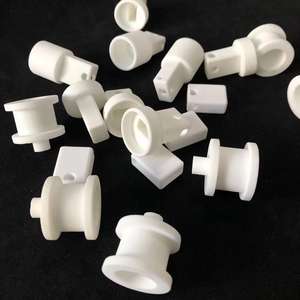
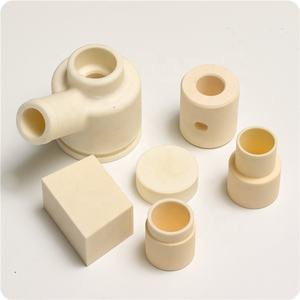
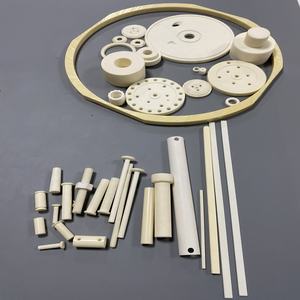
Ceramic Components are not ordinary parts. They run where steels soften, where plastics deteriorate, where electrical insulation must coexist with thermal conductivity, and where a solitary particle of contamination can spoil a semiconductor wafer or a high-purity chemical batch. Yet the market usually treats ceramic parts modification as an easy deal: send out an illustration, obtain a quote, await delivery. That approach fails because ceramic manufacturing is not a machining solution put on a blank. It is a chain of decisions concerning product grade, developing course, sintering contraction, ruby grinding, surface coating, edge high quality, cleaning, and evaluation evidence. Each choice carries consequences that an illustration alone can not express. The Ceramic Parts brand exists to close that void. We are a vendor constructed around the inquiries that buyers must ask before putting an order, and around the technological discipline called for to answer them truthfully. Our job begins with the application, not the drawing. It proceeds through material choice, design-for-manufacturability review, model validation, and set consistency. And it ends only when the provided component performs in the customer’s system, not merely when it passes a dimensional assessment. This is the story of just how we built a ceramic parts business on accuracy, purity, and partnership instead of on cost alone.
2. The Origin of the Ceramic Components Brand
The Ceramic Components brand name expanded from a pattern of failings that our creators observed consistently in the industrial ceramics trade. Clients would certainly ask for high-purity alumina or silicon carbide components, get components that met the specified dimensions, and afterwards uncover troubles that no illustration had actually caught. A securing face dripped due to the fact that the surface area roughness was specified globally as opposed to on the functional band. A wafer-handling component shed fragments since side chips were undefined. A thermal plate failed to handle warmth since monotony and parallelism were ignored in favor of total thickness. These were not producing problems in the slim sense. They were specification failures, and they originated in a discussion that had actually never asked the appropriate questions. Our creators, drawing on more than twelve years of advancing experience in advanced porcelains and nanomaterials, decided to construct a business that would ask those concerns prior to the first chip of material was reduced. The very early group consisted of engineers who had worked with alumina, zirconia, silicon carbide, aluminum nitride, and boron nitride across semiconductor, brand-new energy, and high-temperature commercial applications. They recognized that ceramic components are challenging not due to the fact that the material is mystical yet because the end result depends on positioning in between application, material, procedure, and approval criteria. That understanding came to be the foundation of the Ceramic Components brand name. We grew from a specialized vendor right into an international partner for customers who need high-purity ceramic elements and that value a distributor that deals with modification as a technological cooperation rather than a magazine transaction.
3. Core Craft: The Questions That Define Top Quality
Our core craft is the regimented technique of asking the concerns that determine whether a ceramic part will certainly succeed or stop working in service. We do not start with a price. We start with the operating setting: temperature variety, chemical exposure, mechanical tons, electric demands, and the material of mating parts. These problems narrow the product family members before a single measurement is reviewed. Only after that do we relocate to the illustration, and when we do, we reviewed it critically instead of essentially.
Material Selection Starts with Feature, Not Purity Numbers
Customers typically ask for the highest possible available pureness out of caution, and in contamination-sensitive semiconductor or high-purity chemical applications, that caution is warranted. But purity is not a global great. A 99.9 percent alumina might be needed for a plasma-facing element, while a reduced grade might offer perfectly in an architectural spacer where expense and machinability issue a lot more. Our technical team reviews what the product has to in fact do: isolate electrically, carry out heat, resist wear, make it through thermal cycling, or prevent infecting a process stream. We match the grade to the task as opposed to a reflex for maximum specifications. This approach sometimes surprises consumers who expect a provider to merely verify their material choice. We would rather explain why a different quality might offer them much better than accept an order that carries unneeded price or hidden risk.
The Drawing Is a Starting Factor, Not a Final Direction
When a customer sends an illustration, our engineers review it for manufacturability before pricing estimate. Ceramic components are developed and sintered before they are machined, and sintering shrinking normally falls in the variety of twelve to twenty percent relying on material and developing course. An attracting that disregards this reality will certainly create a part that misses out on last measurements despite exactly how meticulously it is ground. We likewise search for functions that develop risk: sharp inner corners that focus stress and anxiety, thin wall surfaces that deform throughout firing, deep holes that test diamond tooling, and tolerance callouts applied consistently across surfaces that have different practical value. An accuracy resistance on a non-critical external wall surface includes expense without including worth. A loose resistance on a securing face invites leakage. Our review separates these situations and returns a drawing noted with the attributes that really govern approval. This is not a governmental step. It is the difference between a quote that mirrors the genuine manufacturing strategy and one that reflects just the consumer’s initial presumptions.
Tolerance, End Up, and Side Quality Are Practical Decisions
Ceramic machining with diamond tooling can accomplish limited tolerances, commonly in the range of plus or minus zero factor zero one to zero factor no five millimeters for crucial functions, with surface roughness values that reach listed below one micrometer Ra and finer on refined faces. However capability is not the same as requirement. Every increment of accuracy enhances grinding time, inspection problem, and being rejected risk. Our strategy is to specify precision where it safeguards function: on mating diameters, securing bands, thermal get in touch with faces, information surface areas, and particle-sensitive edges. Somewhere else, basic resistances offer perfectly well. We apply the very same reasoning to border top quality. In cleanroom and high-purity applications, a chip on an airflow-exposed side can become a bit source. In an architectural component much from the procedure chamber, the very same chip might be aesthetic. We ask the consumer to identify which borders matter, and we hold those sides to a defined requirement while leaving others under basic criteria. This self-control keeps price aligned with efficiency instead of with an undifferentiated pursuit of rigidity.
Sintering, Thickness, and Microstructure Determine What Machining Can Achieve
A ceramic component is not completely defined by its drawing. The forming path, powder circulation, pressing stress, shooting temperature, and cooling down profile determine density harmony and grain structure. A density slope between the core and surface of a part comes to be a contraction gradient throughout firing, creating warpage or fractures that no amount of accuracy grinding can deal with. Our process engineers treat sintering as a layout variable, not a black box. For intricate geometries, we might suggest a near-net forming course that minimizes post-sinter machining, or a layout adjustment that adjusts wall surface density to advertise uniform shrinking. For components that require limited flatness or parallelism, we plan the grinding allowance and fixturing strategy before the first environment-friendly body is pushed. This combination between developing and ending up is what permits us to price estimate sensible preparations and to deliver parts that satisfy requirements across duplicated whole lots instead of only in a very first article.
Assessment Evidence Must Match the Failure Mode
A dimensional report that covers every outside measurement yet states nothing about the securing face, the birthed roundness, or the edge chip problem is not a beneficial quality document. It is a convenience blanket. Our examination preparation begins with an easy question: what would cause this component to fall short in the client’s application? If the response is leak at a lapped face, then monotony and surface roughness on that face have to be measured and reported. If the answer is healthy or activity repeatability at a sleeve birthed, then satiation, cylindricity, and size tolerance at the bore should be evidenced. If the solution is particle generation from a wafer-adjacent edge, then side problem must be checked versus a specified standard and documented with microscopy or an aesthetic requirement. We settle on evaluation approaches and acceptance standards with the customer prior to manufacturing, and we supply the proof that corresponds to the real risk. This is not added documentation. It is the only method to understand that a part will certainly work prior to it is installed in a system where failure is pricey.
4. Global Influence and the Technique of Uniformity
The Ceramic Parts brand name serves clients across more than twenty nations, with an item profile that consists of alumina, zirconia, silicon carbide, light weight aluminum nitride, silicon nitride, and boron nitride components for semiconductor tools, new power production, digital ceramics, thermal administration, and high-temperature industrial procedures. Our global reach is improved a straightforward principle: a vendor is just comparable to its uniformity. A solitary successful prototype verifies that a design is viable. It does not prove that the hundredth component will certainly match the first. Batch uniformity needs control over basic material great deals, forming parameters, shooting profiles, grinding wheel wear, and assessment judgment. We have built our quality system around these variables, with documentation that enables a consumer to map a supplied part back to its material certificate, procedure records, and evaluation data. For clients in semiconductor and high-purity markets, this traceability is not a deluxe. It is a certification demand. Our technological support extends past the delivery. When a customer experiences a setting up concern or an efficiency inquiry, our engineers engage with the application context instead of pulling back to a requirements sheet. This approach has made us long-term collaborations with customers that value a provider that recognizes what occurs after the part leaves the loading dock.
5. Future Vision: From Element Supply to Application Guarantee
The future of the Ceramic Parts brand name is not concerning selling a lot more kgs of material or pricing estimate more line items. It is about moving from component supply to application guarantee. Industrial porcelains are significantly central to technologies that require greater than ordinary products: power electronics that need aluminum nitride substrates with precise thermal paths, semiconductor processes that depend on plasma-resistant parts with regulated pureness, and high-temperature manufacturing that counts on silicon carbide and boron nitride where metals and polymers can not endure. Each of these applications requires a provider who can discuss failure modes, not just measurements. Our vision is to deepen that ability. We will continue buying material characterization, process control, and inspection methods that produce proof rather than assurance. We will expand our assistance for customers who are establishing brand-new layouts, using manufacturability testimonial and model version as a basic component of the interaction instead of a special service. And we will maintain the technique that built this brand name: asking the concerns that matter before the order is positioned, and delivering parts that carry out in the application instead of just passing assessment. Growth without that technique would certainly be a different business, and it is not the one we intend to build.
6. A Word from Chief Executive Officer Roger Luo
I established this brand to provide designers ceramic components they can trust, backed by straightforward inquiries and strenuous procedure control.
7. Closing: The Component and the Application
Every Ceramic Parts order begins with an illustration and finishes with a component set up in a system where failing lugs a price. We treat both ends of that journey with equal severity. The drawing should read for feature, not simply measurement. The component must be made with process control that prolongs from powder to packaging. And the conversation in between client and supplier must be sincere adequate to identify what issues and disciplined enough to supply it continuously. We invite engineers, purchase groups, and technical leaders to bring us their most demanding ceramic challenges, not since we claim to know every little thing, however because we want to ask the concerns that cause the right response. A ceramic component is just as good as the understanding behind it. That understanding is what the Ceramic Components brand name exists to give.
8. Vendor
Ozbo focus on the research and development, production and sales of ceramic products, serving the electronics, ceramics, chemical and other industries. Since its establishment in 2015, the company has been committed to providing customers with the best products and services, and has become a leader in the industry through continuous technological innovation and strict quality management.
Our products includes but not limited to Aerogel, Aluminum Nitride, Aluminum Oxide, Boron Carbide, Boron Nitride, Ceramic Crucible, Ceramic Fiber, Quartz Product, Refractory Material, Silicon Carbide, Silicon Nitride, ect. If you are interested in Silicon carbide ceramic, please feel free to contact us.
Tags: Ceramic Parts,ceramic dish, ceramic piping
All articles and pictures are from the Internet. If there are any copyright issues, please contact us in time to delete.
Inquiry us